
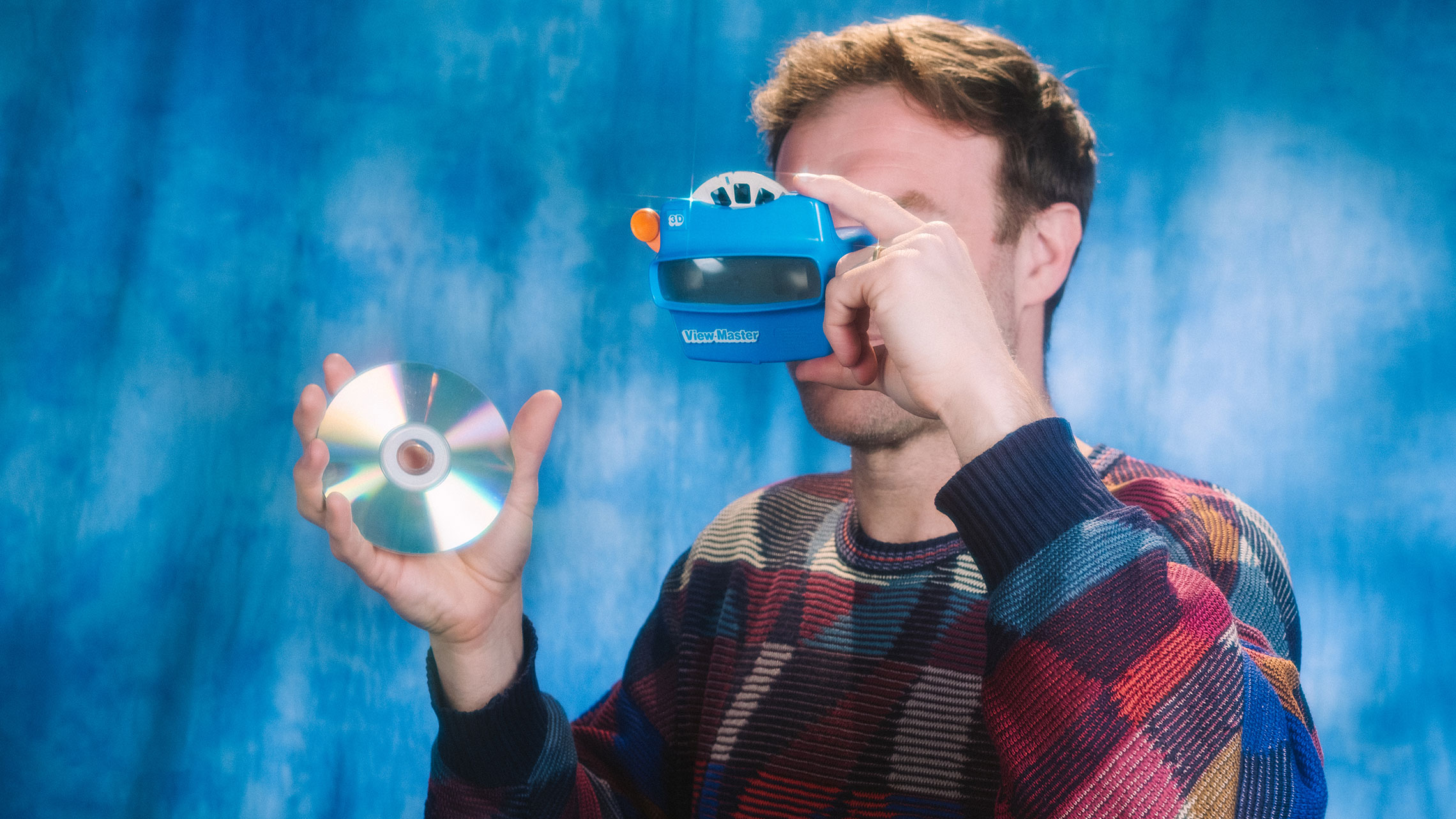
Seeing is Being
A conversation with Sam Baumel
For the last decade, filmmaker and college professor Sam Baumel has been making immersive video for brands as varied as the U.S. Army, Tropicana, Christie’s, and Canon.
More recently, he’s bringing his storytelling skills and the latest technology to bear on our most vital and perhaps beleaguered industry: journalism.
We spoke with Sam about the throughline of his varied and engaging work, which can also be found at sambaumel.com.
You’ve been making immersive video for brands for over a decade. When a client calls you now, are they asking for something fundamentally different than they were five years ago?
When I started making spherical imagery in 2014, it was neat to explore a 360 image, by simply clicking & panning on a laptop, Google Street View-style. Then, using the accelerometer on the phone to point and look around was magical for a time. That novelty has worn off.
As the headset market grew, a more sophisticated appreciation for the power of immersive storytelling emerged. Collaborators aren’t asking for 360 virtual tours to be viewed flat on a browser anymore. When people understand how compelling the experience is to view stories with the latest eyewear, there’s no turning back - they want the enhanced depth, clarity and presence these devices afford. They want to play to that strength.
There’s a report in Primary from Gaza with no voiceover, no editorial framing, just being there. What do you intend for the viewer to think or learn?
There is life there. There are children. Children are living their childhoods there.
What was it like to bring Primary to journalism students? How did they react to the technology?
This future is obvious to them. Their optimism is contagious. Despite a lot of doom & gloom in the news business, the potential to represent truth with new technology and platforms like Primary inspires hope.
You move through 360, VR180, spatial video, and the URSA Cine Immersive. Does each transition feel like learning a new instrument?
These cameras are like different backpacks. I don’t go anywhere without a backpack. The backpack I choose enables where I go. This frameless medium transports viewers to the spot where the recording occurred.
So, choosing the right camera is like choosing the right backpack: one for the mountain, one for the plane, one for the bike and one for the train. I didn’t strap a Blackmagic URSA Cine Immersive to the head of the skydiver, but it was fine to bring it into the cranberry bog. Shooting spatial video on the phone doesn’t call attention to itself, which is good for the candor & quick moves required for the dispatches on Primary: News in Depth. Action cam-sized rigs are perfect for getting an inside-the-fridge shot.
Just as each backpack is a container for different travel opportunities, each camera contains unique creative potential.
If spatial video were already on every phone and every screen, what kind of content would exist that doesn’t yet?
Mukbang 3-D
A teaser for Sam’s spatial news app, as well his gorgeous documentary on cranberry harvests, are now playing on Theater.
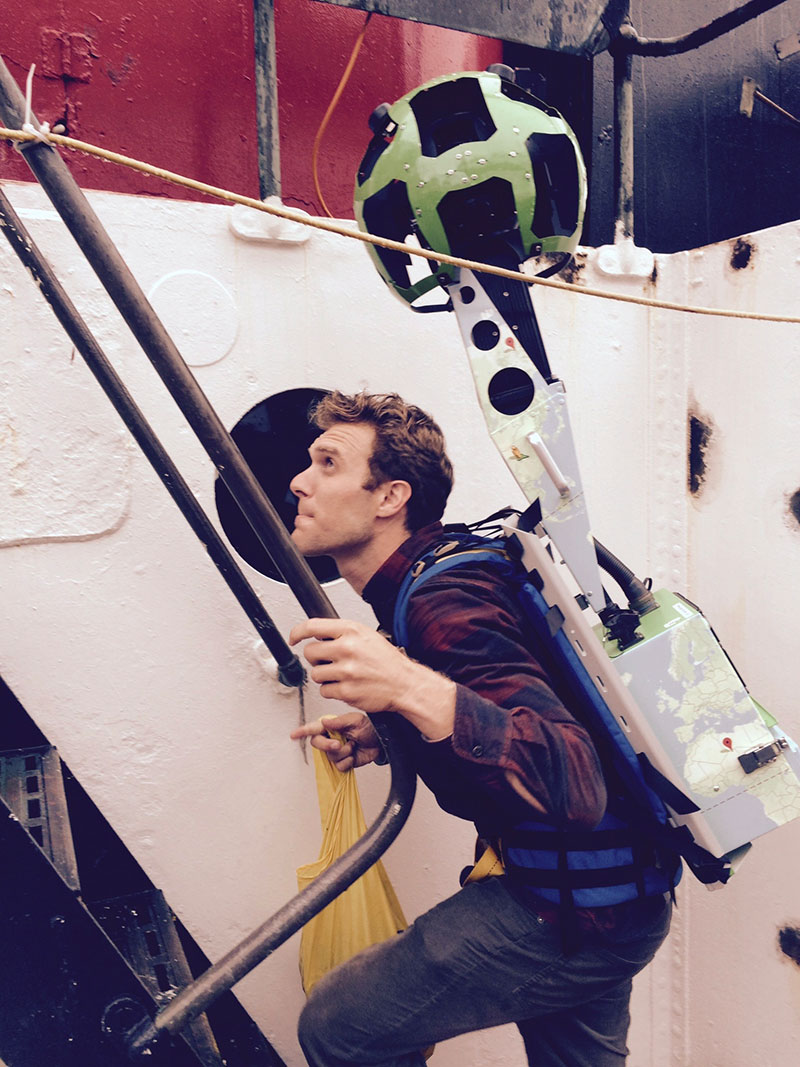
Hudson River View with Google Maps Trekker (2015)
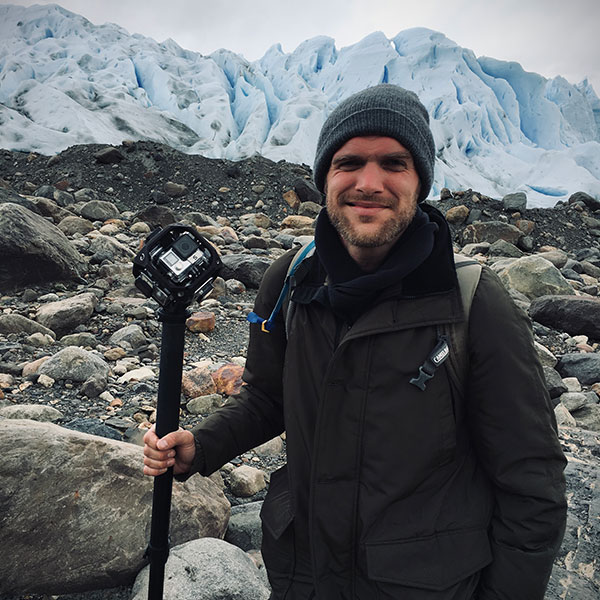
In Patagonia with a bunch of GoPros (2015)
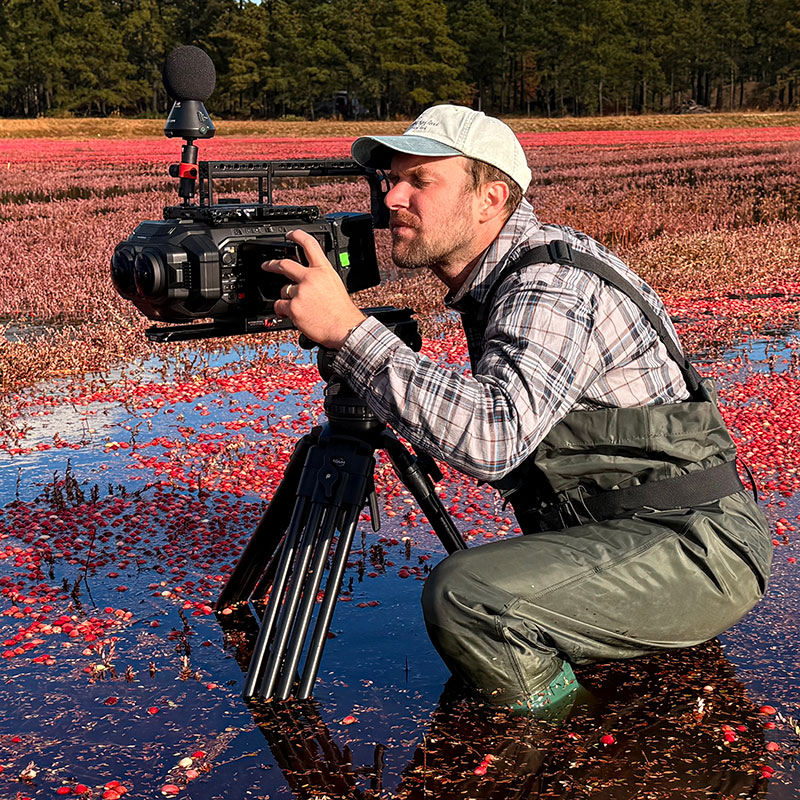
Bogged down with the Blackmagic URSA Cine Immersive (2025)