IRL Immersive Storytelling
Fulldome director Theofanis Matsopoulos has worked on more than 20 documentaries for planetariums that have been presented worldwide and translated into more than 30 languages. We recently interviewed Matsopoulos about his craft and its implications for the future of immersive media.
You can watch his films From Earth To The Universe, The Hot and Energetic Universe, The Sun: Our Living Star and Unveiling the Invisible Universe for free viewing on Theater.The Art of 360° Cinema
How do you approach storytelling differently when your canvas is a complete sphere versus a traditional frame?
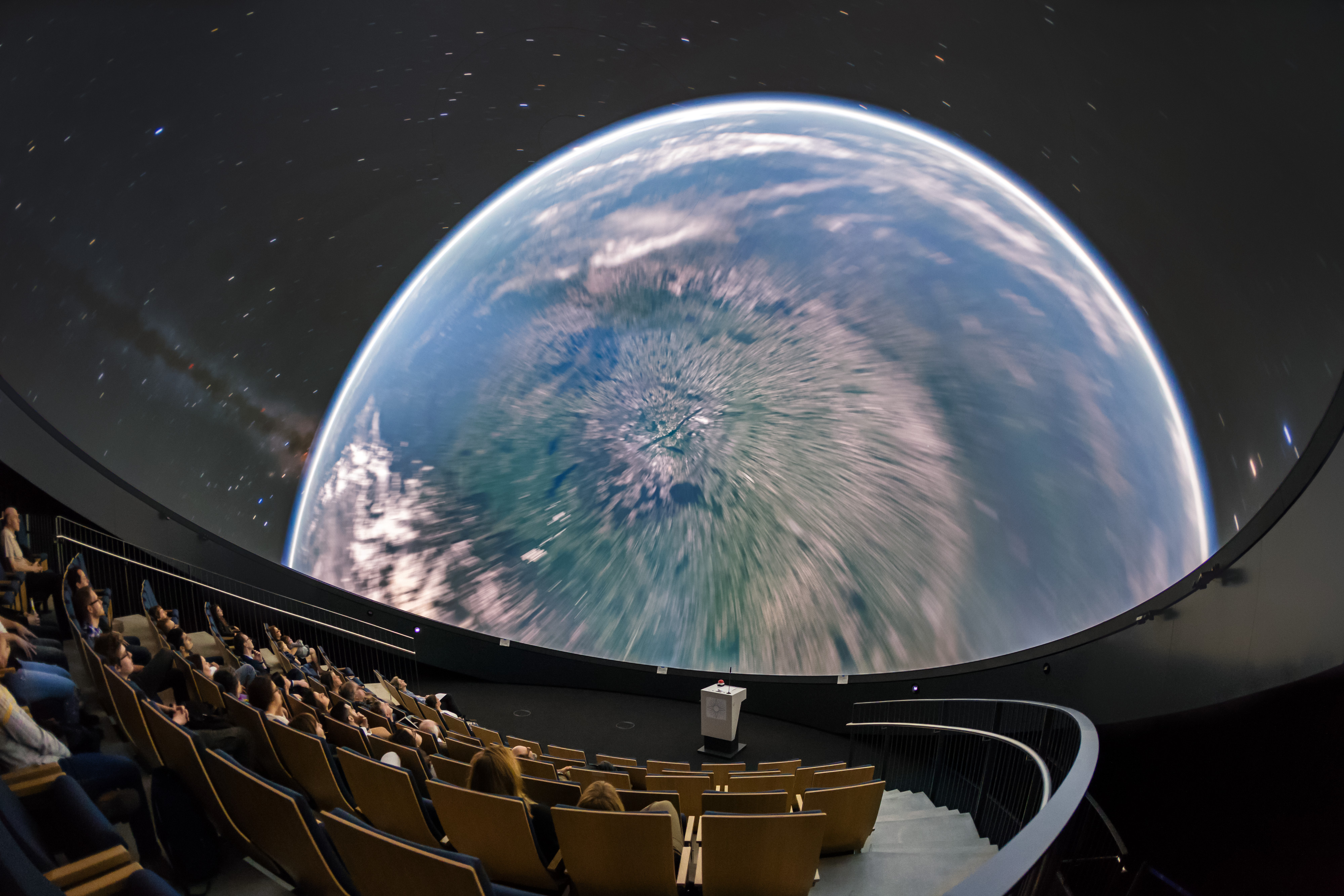
When creating for a fulldome spherical screen, storytelling becomes an immersive, spatial experience rather than a linear visual flow. Unlike traditional TV documentaries, where the frame dictates where the viewer should look, fulldome storytelling requires guiding attention without borders, using visuals and immersive sound to lead the eye across a 360-degree canvas. It’s less about showing and more about placing the viewer inside the story. The goal is to create an environment that surrounds and engages the audience emotionally and physically, making them feel like participants rather than passive viewers.
What narrative techniques have you discovered that only work in fulldome?
In large-screen cinema and immersive formats like Fulldome, narrative techniques rely heavily on scale, spatial presence, and emotional pacing. One unique technique that works exceptionally well is slow visual build-up – the gradual reveal of vast environments or phenomena. Unlike traditional cinema, where quick cuts are effective, immersive formats benefit from letting scenes breathe. This allows the audience to explore the frame naturally and feel physically present within the space. Another powerful technique is narrative layering through perspective. In Fulldome, I often place elements in peripheral vision to lead attention, taking advantage of the immersive medium of the dome screen.
What’s your workflow for previewing and editing fulldome content?
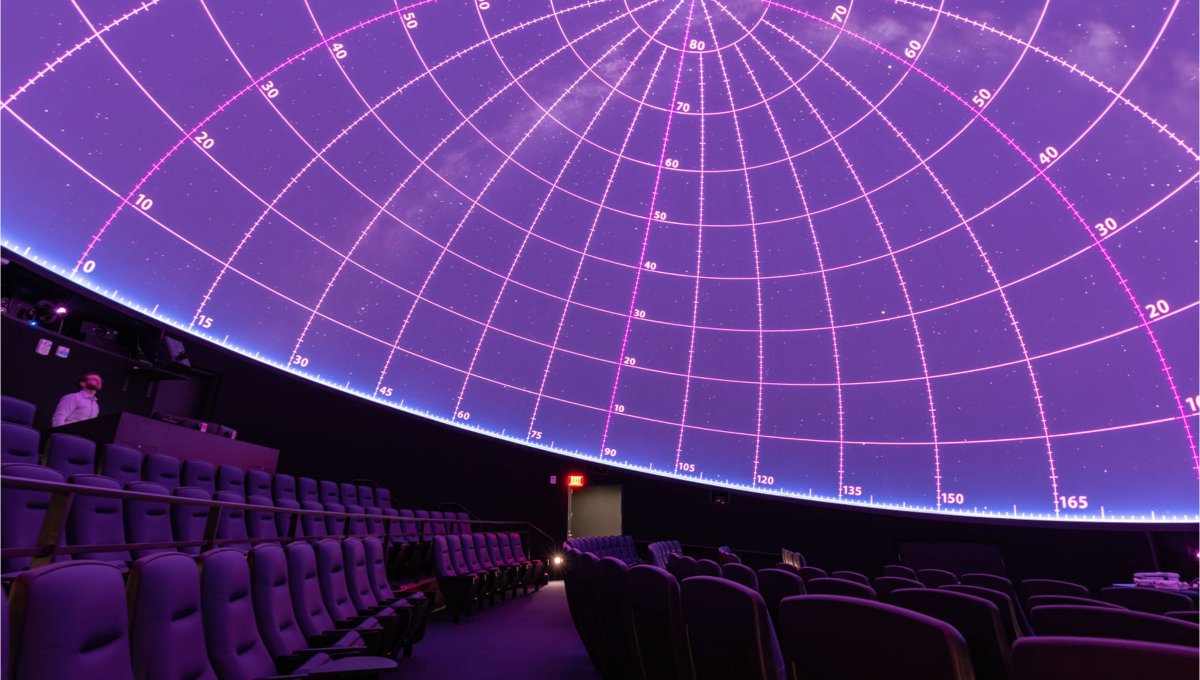
Previewing fulldome content is always a challenge without direct access to a dome. Fortunately, I own multiple portable domes that regularly tour across Greece, allowing me to conduct real-world tests. When I’m close to releasing a new show, I perform extensive tests in these domes to ensure that the visuals are comfortable for viewing and do not cause disorientation or motion sickness in the audience. For high-end productions, it’s essential to test in large-scale planetarium venues to guarantee that the image quality, brightness, and spatial accuracy meet the standards expected in professional settings. While I sometimes use VR headsets during development, I treat them as secondary tools. They are helpful for general spatial awareness, but their color reproduction is not reliable enough for critical visual assessments.
How do you maintain creative vision when you can’t see the full experience on traditional monitors?
After more than 12 years of experience in fulldome production, I’ve trained myself to mentally project how each scene will behave within the dome. It’s not just about imagining curvature of the screen, it’s about thinking spatially and compositionally in 360 degrees. Over time, you develop a kind of spatial intuition. You start to understand how motion, scale, and timing will feel when wrapped across a dome, and how transitions will flow when the audience is surrounded by the imagery. Of course, I test sequences in actual dome environments when possible.
How do you guide audience attention in a 360-degree environment without traditional cinematographic tools like framing and depth of field?
It’s true that guiding the audience’s attention in a 360° or fulldome environment is a unique challenge especially without compromising the immersive nature of the medium. One of the most effective techniques is motion. Our brains are naturally drawn to movement. I often place objects and elements within the space to suggest where to look. Sound also plays a crucial role – spatial sound design is necessary to guide the viewer’s focus in a seamless and intuitive way.
What story types or subjects do you think are uniquely suited to spherical storytelling that haven’t been fully explored yet?
I believe emotional, character-driven stories remain an untapped area in fulldome cinema. While we’ve seen a wealth of educational and space-related content, there’s still plenty of room for exploring human experiences within this immersive format. Artistic narratives, wildlife documentaries, and even abstract storytelling could greatly benefit from the immersive nature of the dome, offering audiences a deeper emotional connection. Of course, there are notable technical challenges particularly in filming, staging, and lighting, but these shouldn’t discourage innovation. It may well be worth the effort for creators willing to experiment and push the boundaries of what’s possible in spherical storytelling.