
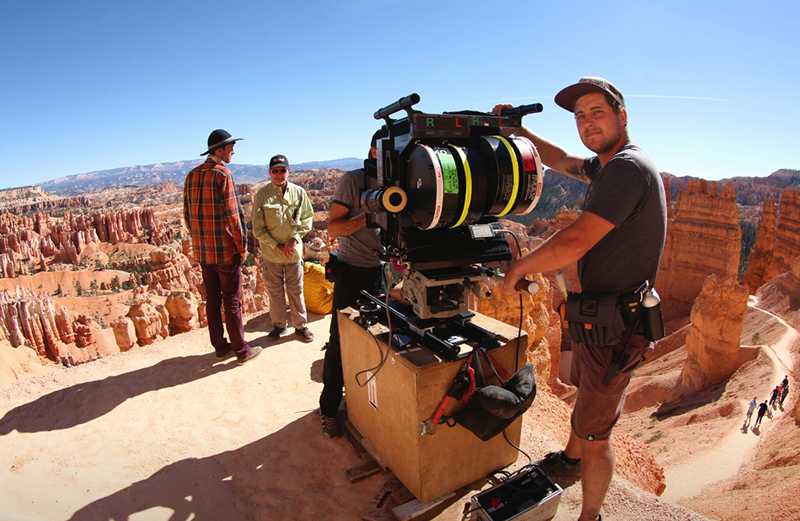
Transported: Immersive cinematography with John “JR” Racine
John “JR” Racine has captured immersive content from IMAX theaters to live VR broadcasts to Apple’s cutting-edge Immersive Video format. His work spans giant screens, helicopter cockpits, and vertical rock faces, always focused on transporting viewers rather than just showing them. We recently interviewed Racine about the craft of presence and what it takes to put someone “there.”
Racine currently leads immersive projects at Rogue Labs, where he’s developing new approaches to aerial and adventure cinematography.
On Craft, Comfort, and Presence
You started with giant screens—literally, the biggest canvases you could find. What drew you to that scale, and how did it change how you think about where an audience sits?
I actually started off at MacGillivray Freeman Films as an Assistant Editor. I learned very quickly that it was not for me and that my passion was being out in the field apart of production capturing the incredible IMAX images with the crew. I learned everything about framing for the IMAX Sweet Spot from Greg MacGillivray (Director) and Brad Ohlund (Director of Photography) at MacGillivray Freeman Films.
NextVR was live VR when that was still uncharted territory. What did you learn that still guides you today?
Live VR with NextVR was an amazing experience. It really taught me how to work in the fast paced environment that is, live production. As most people know, camera placement, movement and proximity are very important in VR to give the user the most comfortable viewing experience, so you have to be very sure your camera is level and set prior to cutting any camera feed for the live feed. I still use all my learnings from Live VR production with NextVR.
With AIV, what are you focusing on that makes it feel like being somewhere rather than watching something?
With Apple Immersive Video, like all Immersive Video, I am always focusing on making the most comfortable and mind blowing experience as possible. I really use the camera as a transportation device and love being able to take people to certain places in the world and put them in specific locations where they otherwise would not be able to be and experience. With the Deep Water Solo piece, the wall that Kai was climbing was at a 45º over hung angle over the ocean. It is impossible to watch someone climb this route on the wall upclose besides how we did it with the custom cable camera. The only way you can see someone climbing it in person is up at the top of the cliff about 200 feet away.
Your rock climbing work with Apple put viewers right there with the climber. How do you decide where ”there” is? What felt right about the distance and perspective you chose?
The Adventure: Deep Water Solo piece was such a pleasure to work on. We had such a fantastic crew, and Kai Lightner was the most calm rock climber I had ever seen climb. Choosing the camera positions was tough. We had to use a very skilled rope access team to safely get us to where we wanted to film from on the wall. We scouted many camera positions and did lots of testing with camera to subject distance to determine what we decided was the “right” distance.
Were there shots you loved that you had to abandon because they didn’t serve the viewer’s comfort?
There were a few angles of the climb that I really wanted to film on the opposite side of the talent, because of the stunning background it had, but it was a massive effort to rig every camera position and timing unfortunately did not allow.
There’s this idea that presence in immersive media is fragile—that small technical or creative choices can break the illusion entirely. What’s your experience with that? What breaks it most easily for you?
There are a lot of little things I’ve learned over the years working in this medium. Abnormal camera heights, water drops on lenses, and not having direct to lens eye contact for interviews are a few that break it for me. It is all trial and error. There is no “right” way for it, but there are a lot of techniques that can help keep that magical immersive presence in a good place for the viewer to forget that they may be sitting on a couch in their home.
Your current work involves Immersive Aviation filming. How does movement in the sky translate to someone sitting still in a headset?
Filming immersive content in a moving helicopter has been an interesting objective. Motion in VR has always been a sensitive subject. I’ve spent years doing R&D on how to move an Immersive camera and keep it comfortable for a user wearing an HMD. The great thing about our setup is that we are rigging the camera in the Co-Pilot seat, and the dashboard gives the user something to lock onto in their view inside the device. This helps with the motion sickness some people see when someone may have a camera moving in a scene with nothing in the foreground to lock onto visually. I’ve been working on some Aerial Air to Air filming in AIV and that is coming soon, so stay tuned for that!
What surprised you about shooting AIV from aircraft? What works differently than you expected?
I didn’t realize how much Helicopters vibrate and how necessary it is to take the time to get rigging and stabilization just perfect! We’ve got a great system now and I feel confident about being able to rig in any aircraft now.
What feels important to establish now, while we’re all still figuring out the language?
I think it is important for everyone in this space to work together towards making amazing experiences for Vision Pro. It will be tough and take time, but I am so excited about the future of Immersive Video and am not stopping in terms of expanding the possibilities of this medium.
If someone handed you their first AIV project tomorrow, what’s the one thing you’d tell them to get right above all else?
Take the time to scout and plan your shots well. Immersive Filming takes more time, don’t short change yourself of time for setups on locations. Level your camera!
See more from John: Explore current immersive work and projects at Rogue Labs.
You can also keep up with John at his professional web site: spatialunlimited.com
Photos courtesy of John "JR" Racine.
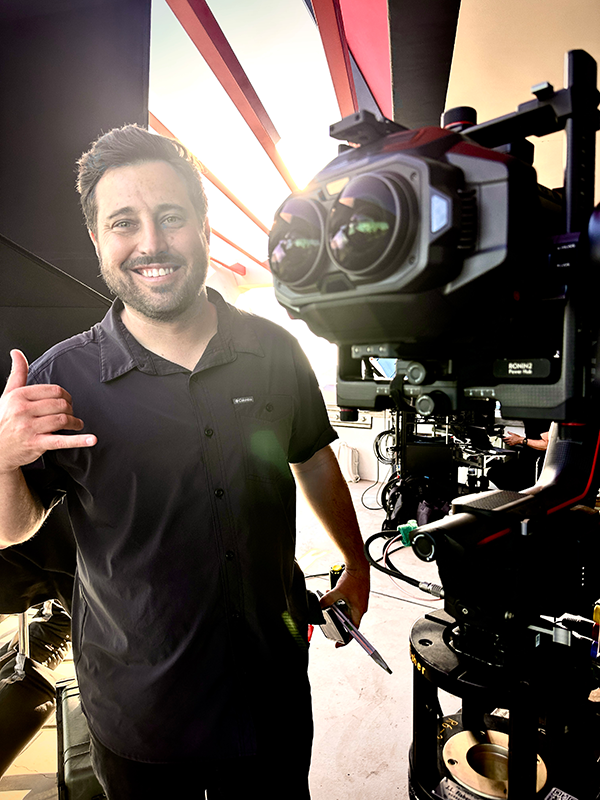
JR on location with BlackMagic camera
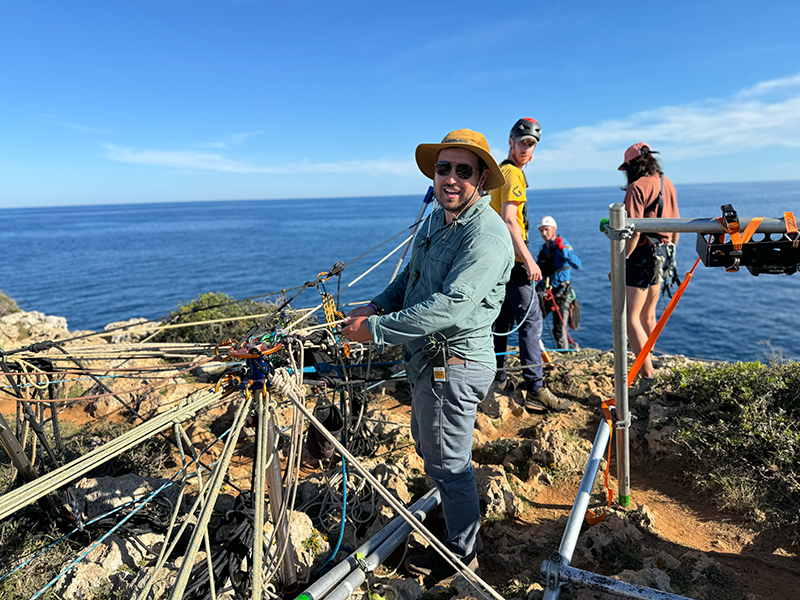
Custom rigging for immersive capture
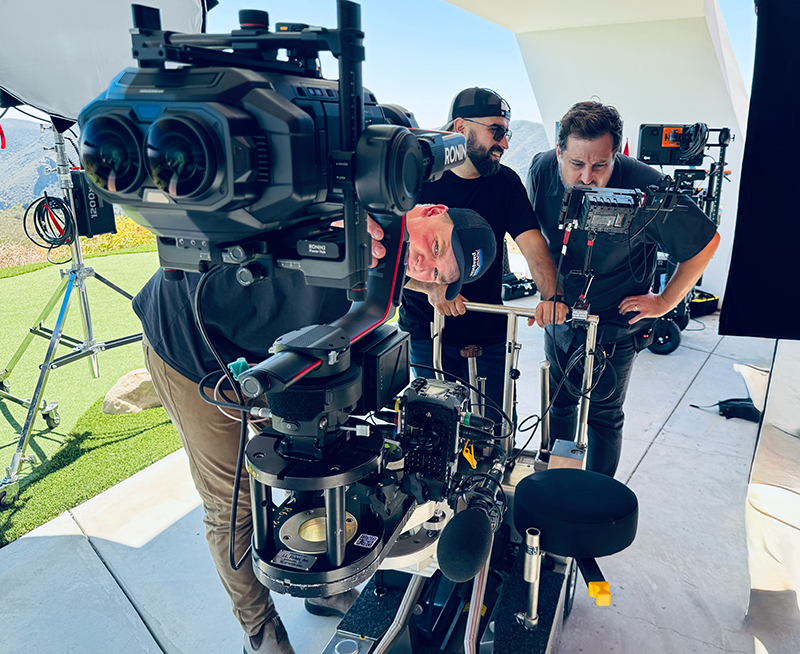
AIV production team in the field